
Structured Event Memory Model: A Computational Framework
PublishedPublished:
Python TensorFlow
Python 3 + TensorFlow 2+ implementation of the SEM cognitive model for event memory research

My research investigates how people perceive, segment, and remember ongoing events using eye-tracking, fMRI, and computational modeling. I combine behavioral experiments with machine learning approaches (vision-language models, neural networks) to understand the cognitive and neural mechanisms underlying event cognition.
Below are my current and completed research projects, showcasing computational sophistication, methodological rigor, and a coherent research program on event perception and memory.
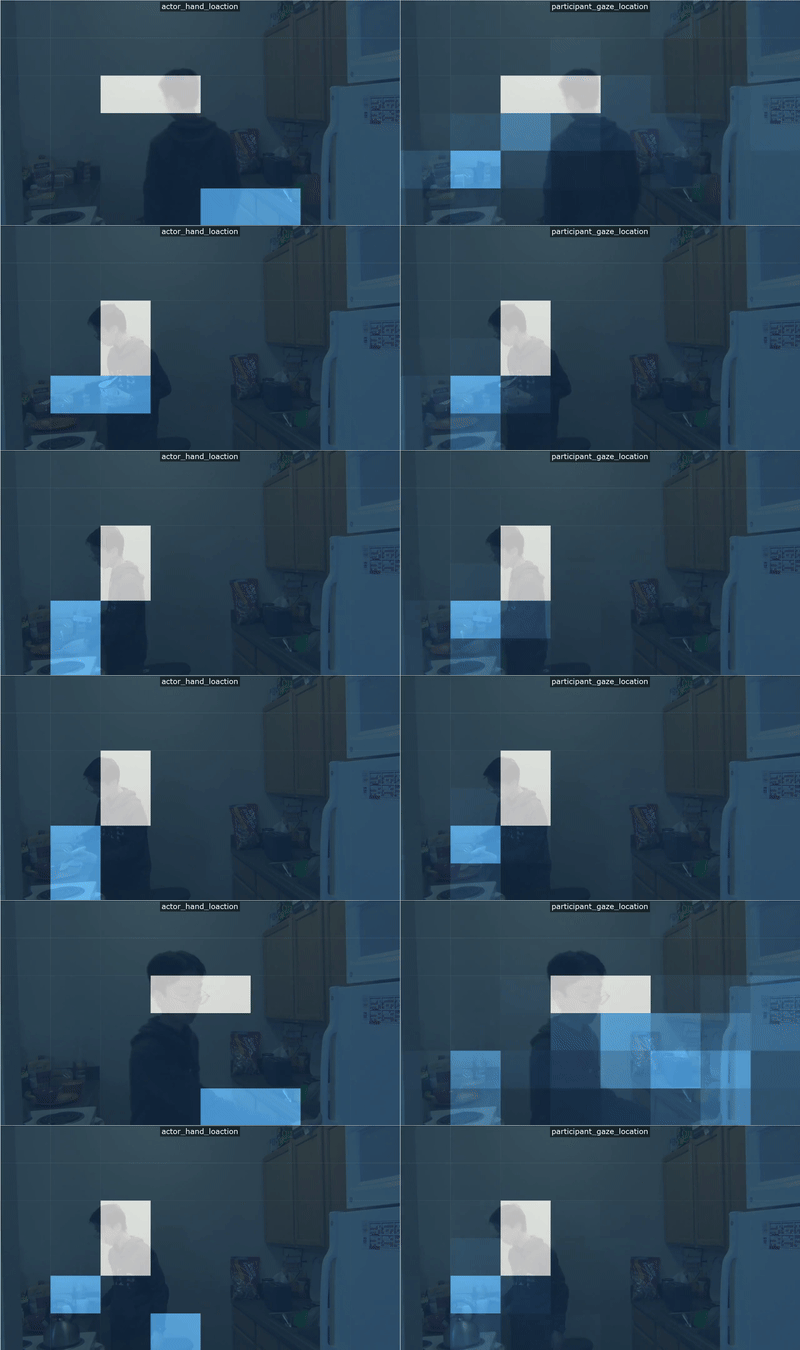
Using CLIP vision-language models to decode semantic content from eye-tracking data
Dissertation project using fMRI and computational modeling
Published:
Python 3 + TensorFlow 2+ implementation of the SEM cognitive model for event memory research
Published:
Investigating the role of mimicry and action execution in event perception and memory encoding
Published:
Investigating whether event model updating occurs gradually or suddenly during narrative comprehension — Dissertation Project
Published:
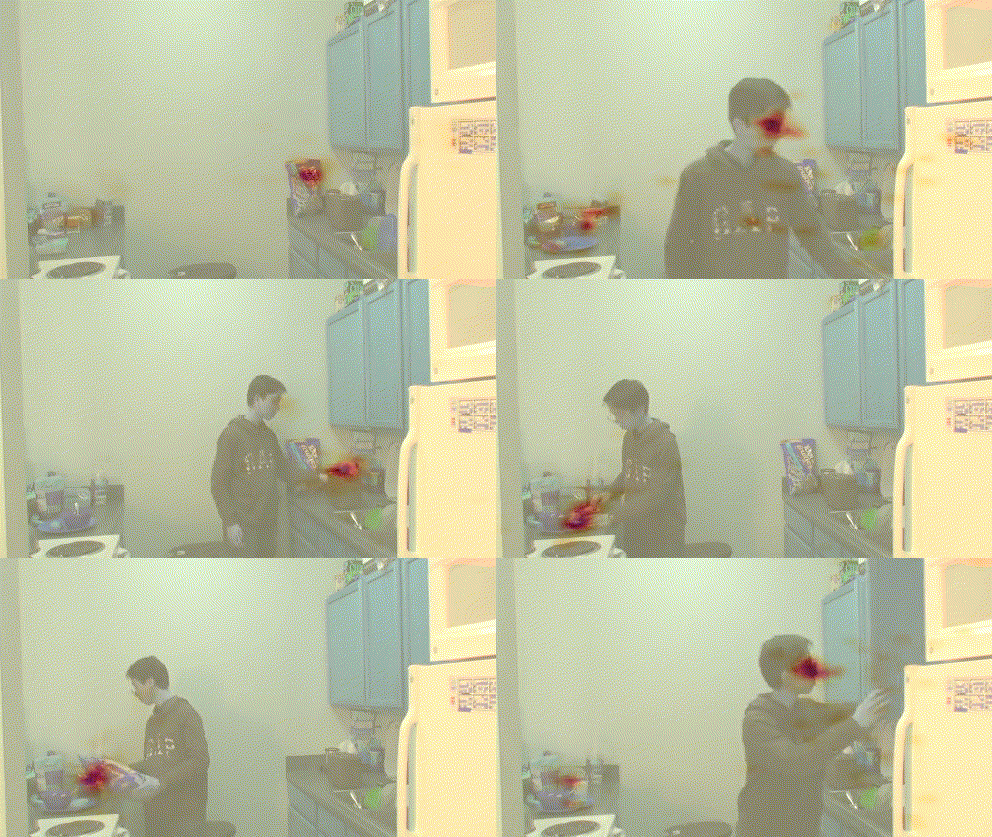
Gaze entropy increases predictively before event boundaries, revealing proactive cognitive control during naturalistic viewing
Published:
Interactive visualization platform for pose estimation and pantomimed action recognition research
Published:
Using CLIP embeddings to decode the semantic content of mental models from eye-tracking data during naturalistic viewing
Applied research and translational work demonstrating how cognitive science findings can be translated into practical tools and applications.
Published:
A UX demo applying EMRC theory from cognitive neuroscience to help patients remember medication changes


